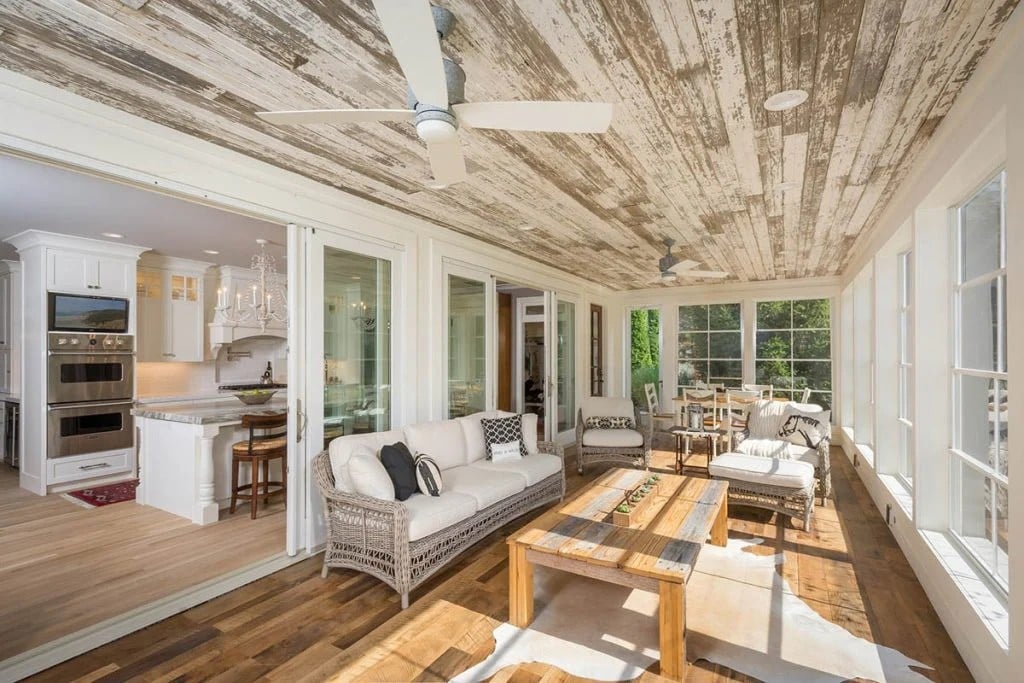
If you’re considering a home addition, you may be comparing a 4-season room vs sunroom. Both options add natural light and extra living space, but they are designed very differently. The right choice depends on how you want to use the space.
Many homeowners assume the terms are interchangeable. In reality, sunrooms and 4-season rooms differ significantly in insulation, construction, and year-round usability. In climates with hot summers and cold winters, those differences can have a major impact on comfort and long-term value.
What Is a Sunroom?
A sunroom is designed primarily for use during spring, summer, and fall. The goal is to create a bright space that connects the indoors with the outdoors while offering some protection from weather.
Sunrooms typically feature large windows or glass panels that maximize natural light and backyard views. Because they’re designed for seasonal use, they often have minimal insulation and may not be connected to the home’s primary heating and cooling system.
Many sunrooms are built on an existing deck or slab, making them a simpler addition compared to a full room expansion.
Advantages of a Sunroom
- Lower construction cost than a 4-season room
- Faster installation timeline
- Abundant natural light and outdoor views
- Great space for relaxing or entertaining during warmer months
Limitations of a Sunroom
- Less comfortable during winter or extreme heat
- Usually not counted as full living space
- May provide less resale value than a fully insulated addition
In colder climates, sunrooms can become difficult to use in winter without upgrades like additional insulation or heating. During summer, ceiling fans are often recommended to help manage heat buildup.
What Is a 4-Season Room?
When comparing a 4-season room vs sunroom, the biggest difference is year-round usability.
A 4-season room is designed to function as a true extension of your home. It is built with a proper foundation, insulated walls and ceilings, and energy-efficient windows. Most are also connected to the home’s HVAC system to maintain consistent temperatures throughout the year.
Because of these construction standards, 4-season rooms can be used just like any other room in the house. Homeowners commonly use them as family rooms, dining areas, home offices, or playrooms.
Benefits of a 4-Season Room
- Comfortable year-round, including during winter and summer
- Feels like a natural extension of the home
- Adds functional square footage
- Often provides stronger resale value
Considerations Before Building One
- Higher upfront construction costs
- Longer build timeline
- Permits and inspections are usually required
Despite the higher investment, many homeowners choose 4-season rooms because they provide consistent comfort and daily usability.
Key Differences: 4-Season Room vs Sunroom
While both options provide natural light and extra space, the way they are built determines how they can be used.
Sunrooms are typically designed as seasonal spaces, prioritizing sunlight and outdoor views over full insulation. They work well for homeowners who want a casual space for relaxing or entertaining during warmer months.
4-season rooms, on the other hand, are built more like traditional home additions. With insulation, energy-efficient windows, and integrated heating and cooling, they can be used comfortably in every season.
Because of these differences, 4-season rooms often qualify as usable living space, while sunrooms are more commonly viewed as bonus areas.
Which Option Is Better for Your Home?
Choosing between a 4-season room vs sunroom depends on how you plan to use the space.
A sunroom may be the better option if you want a lower-cost addition primarily for enjoying sunshine and outdoor views during warmer seasons. For homeowners who already spend a lot of time outside, a sunroom can create a comfortable transitional space between indoors and outdoors.
A 4-season room is often the better choice if you want a space that functions like the rest of your home. If the room is going to be used daily, the insulation and climate control can make a significant difference in comfort.
Resale Value Considerations
From a real estate perspective, 4-season rooms typically provide more long-term value because they count as functional living space. Buyers often see them as an extension of the home rather than an optional bonus area.
Sunrooms can still appeal to potential buyers, especially those who enjoy natural light and outdoor views. However, because they may not be usable year-round, they generally contribute less to overall home value.
Choosing the Right Addition for Your Lifestyle
When comparing a 4-season room vs sunroom, the decision ultimately comes down to comfort, budget, and how you plan to use the space.
Sunrooms offer a bright, affordable way to enjoy the outdoors while staying protected from the elements. A 4-season room requires a larger investment but provides a fully functional space that can be enjoyed throughout the entire year.
If you’re considering a sunroom or 4-season room and want expert guidance, the team at JS Brown & Co. can help you explore the right option for your home, lifestyle, and budget. Contact us today to discuss your ideas and start planning a space you can enjoy for years to come.